### GOP at a Crossroads: Drone Strikes and Divisive Politics
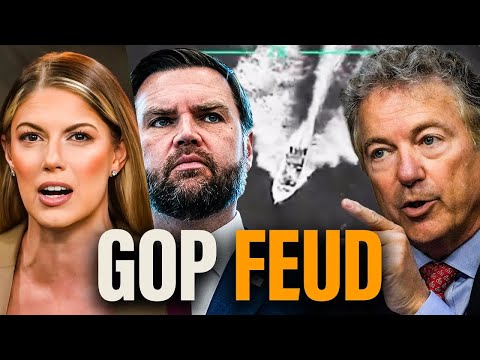
In a move that has ignited more than just fiery debates, a recent drone strike targeting alleged cartel members has opened the floodgates to a robust discussion within the Republican Party about the use of military power. Senator JD Vance has hailed the action as a necessary step in the fight against those who poison American citizens. In contrast, Senator Rand Paul has taken a strong stance against it, labeling the strike as “lawless.” This clash between two prominent GOP figures is illuminating a rift that has been simmering beneath the surface, revealing differing beliefs on how, and when, the United States should flex its military muscle.
The drone strike in question was aimed at a boat reportedly occupied by cartel members involved in drug trafficking. JD Vance believes that the military should prioritize actions that protect American lives, arguing that eliminating these criminals is in line with the military’s highest and best use. The sentiment from Vance echoes a growing faction within the GOP that favors a more aggressive stance against foreign threats. Meanwhile, Rand Paul’s critique centers on the lack of due process for the individuals targeted, insisting that even foreign nationals deserve a fair hearing before being executed. This disagreement isn’t merely about one incident; it lays bare an ideological divide on foreign policy that’s been increasingly visible in recent months.
The online sparring between Vance and Paul has resonated with many, with Paul’s dismissal of Vance’s honorability capturing the attention of social media. As memes began to flood the internet, showcasing Paul’s mocking response, it became clear that this was more than just a political argument—it was a glimpse into modern day politics, where debates unfold not only in legislative halls but also in Twitter threads. Paul’s insistence on a methodical, legalistic approach to military action represents a more libertarian wing of the GOP—one that values the intricacies of law over decisive action. On the flip side, Vance’s viewpoint is emblematic of a braver, bolder Republican approach, ready to assert its might in the face of adversity.
The divide is not just one of personal beliefs; it calls into question what it means to be a Republican today. Within recent months, this split has also become apparent in discussions around other key issues, highlighting the struggle to unify under a single banner. The party is grappling with its identity in an evolving political landscape, one where traditional values clash with a new wave of conservatism that prioritizes action over debate. The implications of this rift, especially in relation to military action, might shape the party’s platform as it heads into future elections.
In the background, another skirmish is brewing in the Senate. Republicans, led by Senator John Thune, are taking steps to streamline the appointment process for Trump nominees, facing stubborn obstruction from Democrats. With hundreds of nominees waiting in the wings, Thune’s team is prepared to leverage recent rule changes—changes previously initiated by the Democrats themselves—to expedite confirmations. This push is not only about fulfilling the administration’s agenda but about demonstrating resolve in the face of prolonged delays that have characterized the current political climate.
As the GOP navigates these waters, the outcome of both these debates could lay the groundwork for future party directives. If Republicans choose to embrace a lynchpin approach to military action akin to that of Vance, they risk alienating the more restrained faction represented by Paul. Conversely, should they lean too heavily into caution, they may miss out on the momentum of a base energized by bold policy initiatives. The political pendulum is swinging, and how the party chooses to position itself in these debates might just determine its fate in the coming years.