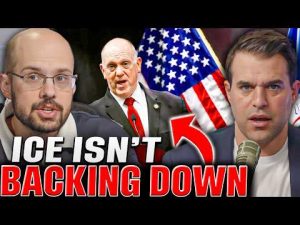
**Illinois Governor Under Fire for Controversial Comments Amid Chicago’s Chaos**
In a recent interview that sparked outrage among conservatives, Illinois Governor J.B. Pritzker found himself in the hot seat over comparisons he made involving the actions of the Trump administration in Chicago. The interview, hosted by Rachel Maddow, has been criticized for featuring what some pundits describe as outrageous propaganda that mischaracterizes law enforcement efforts within the city. The backlash stems from Pritzker’s assertion that the tactics being employed mirror those of the Nazi SS—a claim that many view as deeply offensive and misinformed.
Critics allege that Pritzker, who comes from a wealthy background—often labeled a “trust fund baby”—is out of touch with the struggles of everyday Chicagoans. They argue that rather than focusing on the needs of his constituents, he is more concerned about his political ambitions and the future of the Democratic Party, which is often associated with high-profile politicians like Ilhan Omar and Rashida Tlaib. This has led many to question whether he genuinely represents the people of Chicago or if he is merely playing politics in an effort to gain favor among the party’s radical activist base.
Amidst the chaos and violence that has plagued the city, with escalating confrontations between law enforcement and individuals unwilling to comply with the law, calls for order are becoming louder. Residents of Chicago are reportedly growing frustrated with the state of public safety and are demanding more effective governance. Historically, governors faced with similar circumstances have taken decisive action to ensure the safety of their citizens. Past examples, such as President Eisenhower’s intervention during school integration or even President Ulysses S. Grant’s efforts to combat the Ku Klux Klan, show that tough times often call for tough measures.
Many argue that the “militaristic” approach being criticized today is actually a necessary response to violent protests and rampant crime. In light of the gravitas of threats like gangs and violent offenders, law enforcement must employ adequate measures to protect themselves while fulfilling their duty to protect their communities. Critics of Pritzker suggest that he is failing to support police efforts to not only bring order but also to combat illegal immigrant crime, raising the question: Why are these confrontations primarily happening in blue states like Illinois?
In stark contrast, Republican-led states like Texas and Florida have reportedly maintained a semblance of order without the same level of upheaval seen in Chicago. By cooperating with federal authorities and taking a proactive stance against crime, these governors have managed to preserve peace amidst a diverse population and high immigrant influx. This raises pertinent questions about the effectiveness of leadership in blue states and why democratic governors appear less inclined to take decisive actions to ensure safety.
What seems clear is that Pritzker’s administration may face growing scrutiny as citizens demand accountability and a more proactive approach to law and order. As the dialogue around public safety and governance evolves, the impact on Illinois—and the governor’s future ambitions—remains to be seen. The stakes are high, and many are left wondering whether Pritzker can rise above political theatrics to prioritize the very real needs of his constituents in a city grappling with turmoil.