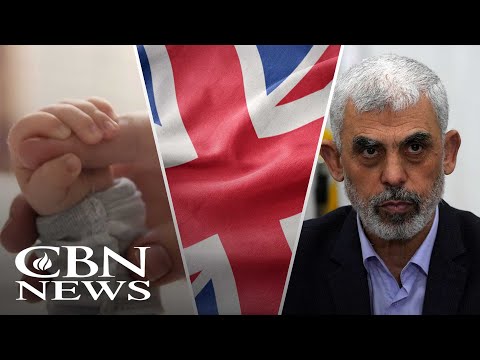
In recent times, troubling developments in the United Kingdom have raised serious concerns among many observers, especially within the evangelical community. One significant issue is the alarming trend of naming newborn boys after Yahya, a figure associated with violence and atrocities. The fact that hundreds of British parents chose to honor this individual through their children’s names suggests a deepening cultural divide, where values are increasingly misaligned with the Judeo-Christian heritage that has historically shaped the nation.
A growing narrative poses a challenge to Britain’s identity and its foundational values. There is concern over an agenda that appears to be aimed at transforming the UK into a country dominated by Islamic principles, which starkly contrasts with its thousand-year history of Christian ethics. Many in the evangelical community may find this deeply unsettling, as it raises questions about the moral compass of society and how it aligns with biblical teachings.
Moreover, the presence of Sharia councils and courts in Britain further complicates the issue. These developments are perceived by many as a shift away from the nation’s Christian roots towards the enforcement of laws that do not reflect the values held by the majority of its population. Incidents where individuals are confronted on the streets for their attire or drinking habits underscore the cultural tensions that are emerging. This situation can be particularly distressing for those who uphold the belief that a nation should reflect Christian morality and principles.
The church plays a crucial role in addressing these concerns. Yet, many feel that it has remained passive while cultural shifts occur within society. As traditional congregations dwindle, historic churches are being converted into mosques, reflecting a tangible shift in religious demographics. This unfortunate reality calls for a renewed commitment from the church to engage actively with the community. It is an opportunity for Christians to step forward and reclaim the spiritual landscape of the nation by encouraging attendance at worship services and fostering a sense of Christian identity.
Interestingly, the current environment may serve as a catalyst for revival. The desire among some Britons to reconnect with their Christian heritage could lead to a renewed fervor for faith. Many conservatives who once may not have considered themselves religious are beginning to recognize the importance of their heritage. They are seeking out churches and asking what it truly means to live in a nation founded on Christian values. This awakening can empower individuals to take a stand for their beliefs, urging them to become advocates for moral and ethical values rooted in Scripture.
As challenges increase and the landscape continues to shift, it becomes clear that the church must rise to the occasion. Believers are called to intercede, to pray for their nation, and to spread the gospel’s transformative message. It is imperative for evangelical leaders and congregations to actively engage in their communities, ensuring that the principles of the faith are not only maintained but celebrated in public life. Only through a concerted effort to foster faith and values can the UK hold onto its Christian foundation amid changing tides.