In today’s hectic world, news travels fast, but narratives evolve even quicker, particularly when it comes to topics the mainstream media conveniently brushes off. One of those topics? The global and local persecution of Christians. Surprising, right? You wouldn’t know it from primetime TV, or most major news outlets, but Christianity is reportedly the most persecuted religion on the planet. And while you might think this is happening somewhere far from home, recent events in our own backyard prove otherwise. A church in Michigan just experienced the kind of horror story that makes one wonder why this isn’t headline news everywhere.
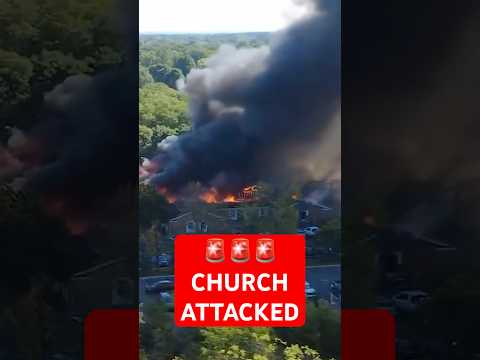
Picture this: a quiet service shattered by a man driving a pickup truck straight into a church, unleashing a terrifying spree of violence. Men, women, and even children attending their place of worship, suddenly victims of an unprovoked attack. As if the shooting wasn’t enough chaos, the church was later set on fire, leaving destruction both tragic and incomprehensible in its wake. Eyewitnesses report scenes more haunting than any fictional thriller, yet it seems like some media giants are practicing the art of selective hearing, failing once again to sound the alarm on this growing threat.
This wasn’t an isolated incident. Just in the past month, Christian churches in Michigan and Minnesota have been targets, alongside incidents involving prominent Christian figures. These events are not just attacks on individuals or buildings; they symbolize a much broader assault on faith and order that seems to be gaining momentum.
Imagine if mosques, synagogues, or other religious sites were under similar repeated attacks. It would be a firestorm of coverage, as it should be. There’d be an outcry, demands for action, and a robust commitment to ensuring safety and justice for those communities. Yet, when Christians face such threats, there’s an uncomfortable silence that follows. It might be time to ask, why the double standard? Are some acts of violence newsworthy while others slide quietly into the shadows?
As we try to wrap our heads around these sobering facts, one thing is clear—there needs to be a more serious approach to defending Christian communities from such targeted violence. Recognizing the pattern isn’t enough; it requires action, prayer, and serious contemplation on how to prevent future tragedies. The victims in Michigan and elsewhere deserve our thoughts and our prayers, but more than that, they deserve our attention, our advocacy, and a commitment to ensuring their safety wherever and however they choose to worship. It’s a calling for all keepers of the faith to step up and reaffirm their dedication to safeguarding Christendom.