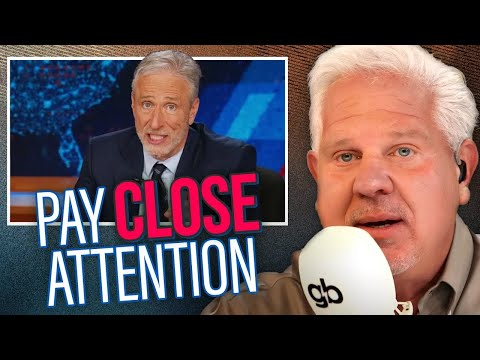
### The Comedy of Confusion: Glenn Beck vs. John Stewart
In the colorful world of American politics and entertainment, few things are more entertaining than the tit-for-tat between public figures. Recently, Glenn Beck found himself at the center of a comedic crossfire with John Stewart, sparking debates about context, truth, and the art of persuasion. While one side thrives in humor, the other wrestles with allegations of being misunderstood and misquoted. Let’s dive into this fray, where conspiracy theories, humor, and a chalkboard take center stage.
Glenn Beck, a well-known conservative commentator, has been in the spotlight for his dramatic predictions regarding the infamous Epstein files. In a particular segment, Beck referred to past claims he made about the files being released, attributing the expectation of this event to Cash Patel rather than Donald Trump. However, in the process of relaying this story, Beck found himself woven into a narrative spun by Stewart, who has made it a point to poke fun at Beck’s conspiracy-focused rhetoric for years. Beck suggested that when Stewart presented his take, it was carefully cut to fit the comedian’s storyline, rather than Beck’s original intent.
Adding more fuel to the fire, Stewart jumped on the chance to question why Trump’s name was intertwined with serious accusations, including questionable associations with minors. Beck quickly clarified that merely buying a teenage beauty pageant title did not equate to any criminal behavior. In his view, Stewart’s use of clips was an example of cherry-picking information to create a sensational narrative rather than presenting a balanced view of the discussion. This whole back-and-forth underscored the classic left-versus-right argument, with each side interpreting behaviors and context through distinct lenses.
At the heart of the matter is the commentary over context. Beck emphasized the importance of seeing the full picture rather than relying on soundbites selected for comedic effect. He argued that Stewart’s comedic chops had overshadowed the actual discussions, leading audiences to draw conclusions that were far from accurate. In a world where a tweet or a video can ignite a storm, this served as a reminder that the truth often takes a back seat to entertainment.
This skirmish also reflects a larger, ongoing battle over narrative control in media. As both sides continue to leverage their platforms to influence public opinion, everyday viewers are left trying to navigate what’s real and what’s ‘just for laughs.’ Beck’s lament is most pointed toward highlighting the slippery slope of exaggeration and misinterpretation that often harms political discourse. In his mind, those on the left, especially comedians like Stewart, place partisan jabs over meaningful dialogue.
Amid the humor and the clash of ideas, one thing is clear: this is a game of politics and perception. It invites all to ponder how easily information can be misconstrued. Beck’s confrontation with Stewart serves as a cautionary tale for both comrades and critics. As conversation continues, the importance of context, truth, and sincere debate becomes even more critical in a world eager for answers. So, for viewers tuning in, it would be wise to keep a watchful eye on how arguments are structured—with a sprinkle of humor, of course!